Short answer
A migraine pain scale rates headache pain from 0 (no pain) to 10 (the worst pain imaginable). Rate the pain you feel right now, use the same anchors every time, and rate it at the start, when you take medicine and a couple of hours later. Questionnaires like MIDAS and HIT-6 measure a different thing: how headaches affect your life.
Key takeaways
- The 0 to 10 numeric rating scale runs from 0, no pain, to 10, the worst pain imaginable.
- Headache researchers also use a simpler 4-point scale: none, mild, moderate, severe.
- There is no single agreed cut-off for mild, moderate and severe on the 0 to 10 scale.
- Migraine pain changes during an attack, so one rating per attack hides useful information.
- MIDAS and HIT-6 measure the impact of headaches on daily life, not pain intensity.
How does the 0 to 10 migraine pain scale work?
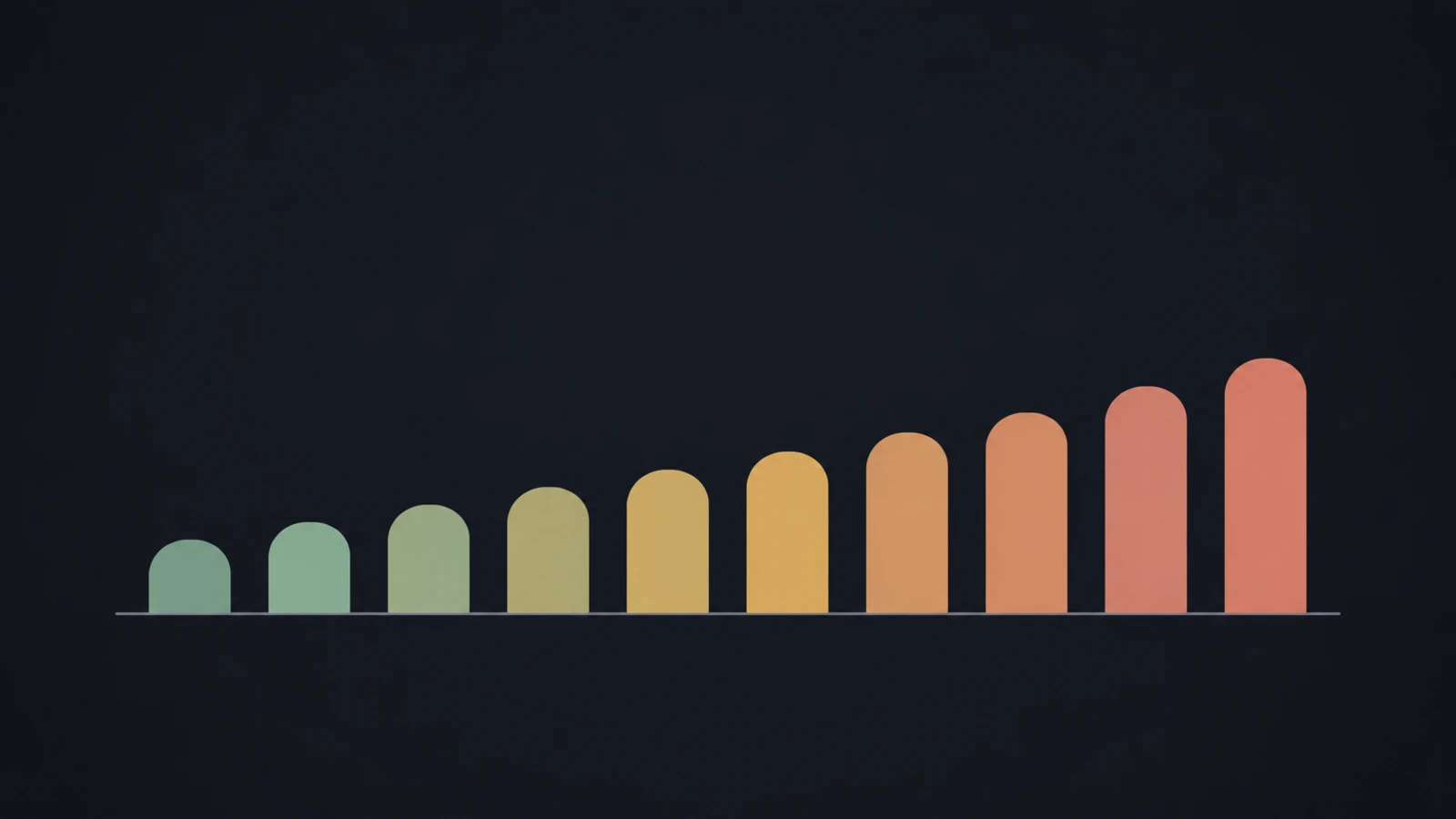
The 0 to 10 pain scale, called the numeric rating scale (NRS), asks you to pick one whole number for how much it hurts: 0 means no pain and 10 means the worst pain you can imagine. It has 11 points in total 2.
The exact words for 10 vary. The Migraine Trust describes 10 as “the worst pain you can imagine” 1. The MIDAS questionnaire uses “pain as bad as it can be” 5. The idea is the same: 10 is the top of what pain can be, not the worst headache you happen to have had so far.
The Migraine Trust suggests recording severity in a headache diary either as mild, moderate or severe, or as a number on this kind of scale 1.
What do mild, moderate and severe mean on a headache pain scale?
There is no single agreed answer. Studies place the line between mild and moderate pain mostly between 3 and 4, and the line between moderate and severe between 6 and 8, depending on the people studied and how pain was defined 2.
One study of people with chronic musculoskeletal pain found that, in terms of how much pain interfered with daily functioning, scores of 5 or less matched mild pain, 6 to 7 moderate pain and 8 or more severe pain 2. That study was not about migraine, which is the point: the cut-offs move with the group and the method.
For your diary, this means two things. Your own numbers are most useful compared with each other over time. And if you also add a word (mild, moderate or severe), your doctor can read both.
Migraine pain itself is described in the classification of headache disorders (ICHD-3) as moderate or severe in intensity, which is one of four pain features doctors look for; a headache needs at least two of them to meet that criterion 4.
Which headache pain scales do doctors and researchers use?
Headache researchers mainly use a 4-point verbal scale, with a 0 to 10 scale or a 100 mm line as alternatives. The International Headache Society’s guidelines for migraine treatment trials recommend the 4-point scale and allow the other two 3.
| Scale | How it works | What the guidelines say |
|---|---|---|
| 4-point verbal scale | 0 = no headache, 1 = mild, 2 = moderate, 3 = severe | Preferred in migraine trials; easy to understand and use 3 |
| 11-point numeric rating scale (NRS) | Whole numbers from 0 to 10 | Responsive and easy to use in everyday practice 3 |
| Visual analogue scale (VAS) | A mark on a 100 mm line from no pain to worst pain | Very high agreement with the 4-point scale 3 |
The guidelines add that, based on trials in other painful conditions, the NRS may distinguish changes in pain better than a 4-point scale 3.
How do you rate migraine pain consistently?
Rate consistently by fixing what 0 and 10 mean to you, rating only the pain you feel at that moment, and using the same scale for every attack. These steps help:
- Write down your anchors once. For example: 0 = no pain; 10 = the worst pain imaginable. Keep the note in the front of your diary.
- Rate the pain right now, not the average. “How much does it hurt at this moment?” is easier to answer honestly than “how bad was today?”
- Use whole numbers. Half points add little and are hard to keep consistent.
- Stick to one scale. Switching between 0 to 10, 1 to 10 and mild, moderate, severe makes attacks hard to compare.
- Write the time next to each rating. In trials, people record the time and pain level when they take a treatment 3.
- Add how well you can function. The International Headache Society uses the question “How well can you function right now?”, answered from 0 (no disability) to 3 (severe disability) 3. It captures what a pain number misses.
- Don’t rate against your worst attack. If your worst attack becomes your 10, a later, worse attack has nowhere to go.
If you use paper, our free printable headache diary template has room for a pain rating with each entry. For where pain fits among the other fields, see what to track in a migraine diary.
Why should you rate pain more than once per attack?
Rate pain more than once because migraine pain changes during an attack, and a single number cannot show how it changed. The International Headache Society notes that migraine pain often starts mild, builds at varying speed to a peak and then fades, and can also go up and down on its own during an attack 3.
That is why trials rate pain many times. The guidelines ask for a rating at the time of treatment, every 30 minutes for 2 hours, hourly up to 4 hours, then at 12, 24 and 48 hours 3. Their main measure of whether an acute treatment works is whether people are pain-free 2 hours after taking it 3.
You do not need that many ratings at home. Three tell a clear story:
- when the attack starts;
- when you take medicine;
- about 2 hours after the medicine.
A record like “6 at 2:30 pm, took medicine, 2 at 4:30 pm” gives your doctor more to work with than “bad headache, took a tablet”. What the numbers mean for your treatment is for your doctor to judge. Migraine Diary, for example, records pain from 1 to 10 and lets you log it several times during one attack, each with its time.
What do MIDAS and HIT-6 measure?
MIDAS and HIT-6 measure how much headaches affect your life, not how much they hurt. Your doctor may ask you to fill one in, and a diary makes the answers easier to give.
| Tool | What it asks | Time frame | Score |
|---|---|---|---|
| 0 to 10 NRS | How much does it hurt? | Right now | 0 to 10 |
| MIDAS | Days of missed or cut-down work, school, housework and social activities | Last 3 months | Grade I (0 to 5 days) to grade IV (21 or more) 5 |
| HIT-6 | Six questions on pain, daily limits, tiredness, mood and concentration | Partly the last 4 weeks | 49 or less (little impact) to 60 or more (very severe impact) 6 |
MIDAS (Migraine Disability Assessment) has five scored questions about days in the last 3 months when headaches made you miss, or cut by half or more, your work, school, household work, or family and social activities. The total gives a grade: I, little or no disability (0 to 5); II, mild (6 to 10); III, moderate (11 to 20); IV, severe (21 or more). It also asks, without scoring them, how many headache days you had and your average pain on a 0 to 10 scale 5.
HIT-6 (Headache Impact Test) has six questions answered from “never” to “always”, such as how often headaches limit your daily activities and how often you wish you could lie down. Answers carry 6 to 13 points each, and a higher total means a greater impact on your life 6.
Pain and impact are related but not the same. In a validation study, HIT-6 scores correlated with headache pain severity at r = 0.46, a moderate link, and with MIDAS scores at r = 0.56 7. Two people with the same pain score can lose very different amounts of their lives to headaches, which is why doctors ask about both.
For the rest of the diary routine, see our guide to keeping a headache diary. If you are also noting possible triggers, our migraine trigger diary guide explains how to keep those notes honest.
Can a pain score tell you when to get urgent help?
No. A pain score is a record, not a safety check. The NHS advises calling emergency services for a headache that came on suddenly and is extremely painful, and for a headache with problems speaking, loss of vision, confusion, a seizure, weakness on one side, or after a head injury 8. Mayo Clinic describes the first of these as an abrupt, very bad headache “like a thunderclap” and also lists headache with fever and a stiff neck 9. If something feels different from your usual attacks, get help rather than reaching for the diary.